Tampilkan postingan dengan label Korean. Tampilkan semua postingan

Minggu, 29 Januari 2012

Making Kimchi

Kimchi is said to be Korea's national dish. A name that encompasses a wide range of chilli-soaked fermented vegetables, Koreans eat it with most, if not all meals and there is a popular Korean saying - 'a man can live without his wife, but not without kimchi'. They take this stuff seriously.

There are hundreds of different types, characterised by main ingredients but also of which season they were made and which region they come from. For someone with such a love of pickles, it was only natural that I would fall in love with kimchi. Its sour tang, hugely pungent aroma and spiciness was a great draw.

Not content with commercial offerings (though very good they are too), I set about making my own. My first attempt was half arsed (below) and it showed. I lobbed a load of chilli powder in with some cucumber and daikon that I needed to get rid of. This produced a harshly flavoured affair and the lot went in the bin and I forgot about it all for a few weeks.

I wasn't to be deterred though and once the kimchi craving hit me again, I set about getting the ingredients to make it properly. Glutinous rice flour is used to make a paste with Korean chilli flakes - and specifically Korean, as they use a type of chilli that is redder and milder than others, thereby colouring your kimchi well without making it so spicy it'll blow your face off.

Mixed with flavourings and seasonings, the vegetable of choice is smeared with this and packed into jars to ferment.

Left out on the side for a couple of days to get the fermentation going, I arrived home one evening and heard a strange hissing sound. After a few minutes of total bewilderment, I discovered it was coming from the jar. I opened the latch and the kimchi promptly exploded across the kitchen wall and covered me in cabbage juice. Fermentation produces gases and I packed my jar too full, causing all the kimchi to rise to the brim (below) and make a break for freedom. My housemate was aghast.


It was a right pain to clean up.

After a couple of days fermenting the kimchi went in the fridge. It tasted great just after two days but for a stronger, more soured flavour the longer you leave it the better it gets. I've taken to eating a lot of it straight from the jar, but I've also used it as a flavouring for roasting broccoli, and frying rice with it.

Cabbage Kimchi

Makes quite a lot

2 heads of Chinese leaf (Napa cabbage)
Loads of table salt

Chop your vegetable up into even sized pieces. Wash thoroughly and then coat liberally in salt, and place inside a colander. Turn every half hour or so, and leave for 3 hours. This is so that the salt leeches the moisture from the cabbage.

110gr coarse Korean chilli powder (Londoners, you can get this upstairs at New Loon Moon)
60gr glutinous rice flour (plain flour will also work)
250mls water
125ml fish sauce
1 large onion, minced
6 cloves of garlic, minced
2" piece of ginger, grated
2 eating apples, peeled and grated
A bunch of spring onions, top and tailed and chopped into three
Many people also add raw oysters or salted shrimp but I'm too much of a wuss. Next time, next time...

Whisk together the water and the glutinous rice flour and bring slowly to the boil, stirring all the time. Cook for a few minutes and take off the heat. Allow to cool.

Stir in the chilli flakes, then add the garlic, onion, ginger and apples. Add the fish sauce and mix well.

Wash the cabbage thoroughly, at least a few times to make sure all the salt has washed off. In a large bowl toss in the spring onions and then add the chilli sludge. Combine well using your hands - if you have any cuts on your hands wear gloves otherwise it'll sting like a bastard.

Pack into a sterilised jar, leaving plenty of room from the top to allow for fermentation gases. Leave out on the side for a day or two (open the lid to this every so often to let the gas escape) and transfer to the fridge. It's good to eat as it is for at least 3 weeks - after that it may become quite strong but still good to use in stews, stir fries and other hot dishes.

Minggu, 08 Januari 2012

New York - December Edition - Not So Cheap

As much as I loved all the cheaper places we visited, leisurely dinners meant coughing up a bit more. My favourite of the trip goes to Schiller's Liquor Bar. Located on the Lower East Side, the room is white tiled, darkly lit and bustling. The bar area was filled with people perched on high stools sipping on beers and we were seated at one of the last tables for two left.

I loved how unpretentious it was; the wine list was simply presented as 3 options; 'cheap', 'decent' and 'good'. When our bottle arrived, CHEAP was plastered across it. I'm not a wine buff in any way, shape or form and our bottle was drinkable and tasted good.

East Coast and West Coast oysters were sweeter with more mineral flavour than ones from our own shores. Crab and articoke dip with melba toast was decadently creamy and rich, though I'd have preferred a little more crab flavour. A seared tuna Nicoise salad (what was I thinking!?) was horrendously overshadowed by The Boy's 'pork chops and roasted potatoes'. What was presented to him was a behemoth plate with two chops and a pile of roasted potatoes, just as advertised. They were cooked in the most delicious caramelised onion, ginger and garlicky sauce. I almost cried with envy.

With a couple of well made cocktails and well deserved tip for our affable and charming waiter, the bill came to around £50 / head.

Schiller's Liquor Bar on Urbanspoon

I was a fan of David Chang since I went to Momofuku Noodle Bar on my first visit. Since then I've become an even bigger fan, having bought his cookbook and the quarterly magazine he's a part of, Lucky Peach. We managed to nab two seats at the bar at Momofuku Ssam early on new year's eve.

I'd have liked to try more of the raw dishes but they were quite pricy, so we settled on one - diver scallops with yuba (tofu skin), satsuma and coriander. The smears were intensely orange flavoured and worked well with the sweet, delicate shellfish. Yuba doesn't taste of much but had a tender texture, much like the skin you get on top of gravy. It sounds rank but it was a great texture contrast to the scallop.

The pork buns, which Momofuku is famous for were pretty damn sexy. Pillowy steamed buns were stuffed with a slab of fatty warm pork belly, with a smear of hoisin sauce and sliced cucumbers. It took everything in my power to refrain from cancelling the other dishes and ordering another seven of these instead.

Fuji apple kimchi with bacon and maple mayo was incredible; rather than the apples being fermented with garlic and chilli over a length of time, the apples were crisp and fresh, having been dressed in kimchi juice instead. The bacon was really smoky and coupled with the maple mayo it was perfect.

Market greens came in the form of swiss chard, cooked in XO sauce and topped with a heap of fried shallots. Cooked until the stalks were al dente and the leaves just wilted, the intense savoury flavour of the XO sauce was thankfully sparing; any more and it would have been overwhelming.

Spicy sausage with fried rice cakes and Sichuan pepper was my least favourite dish of the meal. Although the rice cakes had a great texture, both gooey and crispy from frying, after a while it began to all get a bit samey with each bite. Too stuffed for dessert and with a party to get over to, we decided against desserts. With a couple of cocktails each, our bill again reached around £50 / head.

Momofuku Ssäm Bar on Urbanspoon

After an afternoon of ice skating, we were ravenous. The temperature on our last night was around -5 C; I don't think I've been anywhere that cold. The streets of New York were windy, and as we rushed towards Locanda Verde in TriBeCa I had everything crossed that we wouldn't have to wait long.

The place is cavernous, dark - this is a recurring theme - but lively. Families dined with small children, couples were having intimate dinners and groups of friends were sharing plates. A long L-shaped bar was absolutely rammed, both with people having drinks waiting for a table as well as people eating at the bar. A mere half hour wait while nursing a Negroni was all it took before we were seated.

A tuna crostini with smoked cannellini beans and a hint of lemon was perfunctory enough to keep the hunger at bay. Proscuitto lent smokiness to the prawns they were wrapping, doused in romesco sauce and it was dotted with creamy white beans to give some heartiness to the dish.

Marinated beet salad was a textbook example. Tender beetroot was topped with slices of fennel and happily they didn't go for the obvious goats cheese, but instead smoked ricotta. Some welcome crunch was provided from the pistachio garnish, with a smear of pistachio puree hiding under the beets.

We had a lot of trouble trying to decide on mains, but we were pleased with our spiced duck choice. Huge slabs of flush pink breast arrived, garnished with pomegranate seeds, small faro grains and cavolo nero. The skin was crisp with sweetness with a hint of the exotic, and the meat as tender as butter. A side dish of roasted brussel sprouts was a hearty affair; strong mustard flavours with the slightly bitter brassica was reinforced further with chunks of pecorino and pancetta. It was the unheathiest vegetable side I've laid eyes on in recent times. Obviously I thought it was great.

Orecchiette was served with beans and fennel sausage and a hard strong cheese grated on top. These were gutsy flavours and the little ears held them well. With the beans and pasta combined, it was great comfort food. But good lord we were stuffed afterwards.

A pear, quince and cranberry crisp with vanilla bourbon ice cream sounds quite light and insubstantial, right? That's what we thought when we ordered it to share. A deep ramekin arrived with the aforementioned fruits in a crumble. Crisp, it turns out, is a crumble. Oof. We managed to polish it all off due to its own deliciousness caused by nuts being incorporated into the crumble topping, but I was rendered incapacitated after the meal and could only lie down and make small groaning noises.

Locanda Verde
reminded me a lot of Polpo both in atmosphere and food; unsurprising really, as the recommendation to go there came from Russell Norman. Locanda Verde is a touch more expensive though, we hit £60 a head with a bottle of wine.

Locanda Verde on Urbanspoon

Now I shall be nibbling on dry bread and lentils until my bank balance recovers.

Rabu, 14 Desember 2011

East Street, Rathbone Place

The very idea of 'Pan Asian' makes me sigh wearily and roll my eyes and I know full well that this is the snob in me. The countries are so different in their flavours and techniques I can't understand how a chef can be skilled enough to do all of them fantastically; yet I don't even raise an eyebrow when I see a 'Modern European' restaurant. I suppose perhaps having grown up in the Far East makes me fiercely protective, and no amounts of people telling me they like to have the option of sushi with their Thai green curries will fix that. Not to mention the sheer bloody wrongness of mixing those cuisines with such fervour - it's just not for me. I was almost apoplectic with indignation upon catching sight of Dim Sum Diner's menu.

So you might wonder why I accepted an invite to go to East Street, newly opened on the site of the former Eagle Bar & Diner. I'll be honest. I was seduced by the website. It's all pretty and colourful! And not a California roll of sushi in sight. I had high hopes.

I took a friend I knew would know his Asian and between us we picked dishes that spanned across the continent. Edamame was served freshly steamed and warm while we waited for our first dishes to appear. Bulgogi was thinly sliced grilled beef served with lettuce leaves and kimchi. The beef was grilled nicely to pink and it went well with the spicy kimchi. Wrapped up in a leafy parcel it was pleasant enough.

Tempura prawns were nicely battered crisp, served with the standard tempura dip. Though well priced at £5.75 for the dish, I think you should either pad it out (surely some tempura vegetables can't break the bank?) or use a smaller plate. It seemed sparse.

When our waitress explained the menu to us - and when I say explained, I mean read out the titles - the salads were described as suitable as a main course. Uhm. No. But when shared alongside, it was very nice. The chicken was nicely grilled and the vegetables crunchy, but we both agreed it needed more sourness, a bit more pep. The advertised coriander was barely there.

Special dish of the day was Mee Goreng, from Malaysia. This is a dish of fried yellow noodles with meat, sometimes pickles and egg, often cooked in lard for extra deliciousness. The dish presented to us was nothing of the sort. It was gloopy and lacked any of what we call in Cantonese 'wok hei', breath of the wok. That's the smoky, charcoal smell you get from frying things in a wok at a high heat - that's the kind of smell you encounter all over South East Asia.

My own dish, Khao Soi noodles was billed as chicken and yellow noodles in red curry sauce. A whole two chillis sit next to this menu listing so I was expecting something nose clearing, or at least sweat inducing. Disappointingly, it didn't even induce a sniffle. Again, it was gloopy and rich without enough lime or fresh red onion to cut through that heavy coconut. Deceptively deep, the bowl turned out to be quite small for the £8.95 they were charging though given that I lost interest half way through all the better for the small serving. Why bother with this? What is even the point in saying it's hot on the menu when you won't make it so? This sort of thing really pisses me off; if you're too lame to serve dishes authentically spiced, then don't serve it at all. Open a pie and mash shop or something.

That famous mango with sticky rice dessert seen all over Bangkok was a total disaster. The claggy clump of sticky rice was barely sweet and physically taxing to get through, the coconut cream served either side of it rendered completely useless. The mango was only just ripe, perhaps a touch under given it had still a powdery texture. Miles away from the real thing.

The Malaysian bubor pulot hittam was a black glutinous rice dessert with coconut cream and palm sugar. This was luxurious and tasty, the rice nicely cooked.

All in all, it was as expected. Jack of all trades and master of none. I know people will love this; the bright colours, Cath Kidston-esque decorated stools and the manga cartoons projected onto a huge back wall will be an instant hit, but then again people love that hell hole that is Cha Cha Moon, and for God's sake people still flock to Wagamamas. But me and Pan Asian, we are over. It was a brief flirtation and it just didn't work out.

East Street

3 - 5 Rathbone Place
London W1T 1HJ

Tel: 020 7323 0860

East Street Restaurant on Urbanspoon

I didn't pay as I was invited to review but this would have been £20 / head.

Senin, 12 Desember 2011

Fried Chicken

I don't know anyone who doesn't like fried chicken. I also don't know any vegans, so the two might be connected. Yeah yeah, I know everyone always slags off KFC and how disgusting they are but every now and again I get a deep, intense craving for the crunch of that deep fried crust, the overpowering saltiness and the guilty film of chicken fat. It is unbeatable.

In all its forms the chicken does well deep fried. Katsu'ing and dousing in curry sauce in the Japanese style is how I have it most often, but recently I've had dark thoughts about a filthier affair, one tinged with the tang of Frank's Hot Sauce. Buttery thoughts clouded my mind for days. A friend conducted an experiment in veganism and abstained from all things animal for a whole month and I taunted her with tales of my trips to meaty establishments. I felt like a pretty bad person, so as soon as her month of pain and woe was over I promised her wings. Lots and lots of wings covered in a silky, buttery sauce.

I couldn't stick to one format though. A whole dish of hot sauce-doused wings was one thing, but since we were going through the rigmarole of deep frying, I took the opportunity to try my hand at KFC, or rather Korean fried chicken. A hodge podge of ingredients were slung into bowls ready for the wings to emerge from their bathe in the hot oil to be finally doused in fire.

The coating of the flour makes sure the seasonings stick to the wings and the second frying, though monstrous for your health, give the wings that crisp exterior which is terribly crucial considering the next step of slathering them in sauce.

The frying took longer than I thought, maybe a good 20 - 25 minutes in total. Bear that in mind so that you're not handling saucepans full of shimmering oil and gawping at the TV like I was.

Fried Chicken

Serves 3 with sides - such as celery with blue cheese dip and other such artery cloggers

1 kg chicken wings
1 tsp onion salt
1 tsp paprika
3 cloves of garlic, minced
1 tsp dried oregano
2 tbsp plain flour

Snip the fleshiest piece of the wing away so that they are in two pieces. Toss with the ingredients above and leave for at least 3 hours. Heat up enough vegetable oil in a large saucepan or wok and fry the chicken wings in batches; remove when golden brown and drain on kitchen towel. Fry again until a deep caramel brown colour. Douse in the sauces as detailed below, and serve with kitchen towel and beers.


For the Buffalo Wings:

100ml Frank's Hot Sauce (I'm told you can buy this at Sainsburys now.)
100gr butter

Melt the butter. Mix it with Frank's hot sauce. There.

For the Korean Fried Chicken

3 tbsp gochujang (you can buy this in Chinatown)
3 tbsp light soy sauce
1 tsp sesame oil
3 cloves of garlic, minced
1 inch of ginger, grated
1.5 tbsp rice vinegar
1 tbsp honey
1 tbsp sesame seeds

Mix the above together except the sesame seeds - these are for sprinkling on the chicken once coated.

Minggu, 23 Oktober 2011

Korean Kimchi Stew

I first came across Soondoobu Jiggae (or, soft tofu stew to me and you) at Koba, on Charlotte Place. A bubbling stew in a hot stone pot, it as packed with little clams, silky soft tofu and the punchy heat of kimchi. Further exploration with my chopsticks revealed a perfectly poached egg in the broth.


I've been fairly obsessed with it ever since, and I even purchased myself a dolsot (above, the stone pot you cook the stew in). Now, whenever I feel under the weather COUGH hungover COUGH my thoughts turn to kimchi stew. It's the spiciness with the comfort of the accompanying rice and that egg spilling its golden yolk into the soup, enriching further mouthfuls - it has magical healing properties.

I've made this with various types of kimchi - ponytail radish works well, but cabbage kimchi is more readily available. Sadly I can't often find clams so more often than not I leave them out and instead I add whatever random vegetables I have in the fridge.

Kimchi Stew

Serves 1

3 tbsp kimchi + 1 tbsp kimchi juice
1 small red chilli (optional if you're a chilli head)
2 tsp Korean chilli paste (gochujang) - you can get this at your local Asian supermarket
1 tsp minced garlic
1 tsp sesame oil
1 tsp light soy sauce
200gr soft tofu
1 stalk of spring onion
1 egg

For the broth:
3" square piece of kombu
4 dried anchovies
300mls water
A small handful of bonito flakes

(Or substitute the above with ready made dashi stock)

Heat the water with the kombu and dried anchovies in until it is simmering. Then take off the heat and add the bonito flakes. Leave for 15 minutes and then strain.

Heat the sesame oil in a dolsot or a saucepan. Fry the minced garlic in the oil for a few minutes. Add the chilli paste and the kimchi, then add the dashi broth and soy sauce. Simmer for 25 minutes, then add the tofu and simmer for a further 5 minutes. Break an egg into the stew and simmer for another 3 minutes - if you're using a stone pot you can take this off the heat now. Top with the spring onion. Put it on a chopping board / heat proof mat. Serve with a bowl of steamed rice.

Selasa, 05 Juli 2011

Kimchi Summer Rolls

With summer comes an almost weekly procession of barbecues. I was never a bringer of sausages and burgers to a party; last week these fat, squat summer rolls, a hybrid of the Vietnamese and Korean cuisines, made an appearance instead.

Given my propensity for rolling cigarettes, you'd think I'd make a neater bundle. The first always turns out a shocker; the rest, vaguely passable.

For the filling, bouncy prawns and ponytail kimchi were used. This particular type of kimchi is made from the ponytail radish - so called, I suspect, because of its burst of green leaf. Called 'chonggak kimchi', it's peppery. Sliced into batons, it added a good amount of spicy, tangy crunch. Both ponytail radish kimchi and summer roll wrappers should be available at your local Asian supermarket.

Kimchi Summer Rolls

Enough for 6 people

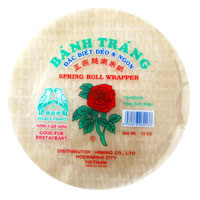
1 packet of summer roll wrapper (I use these)
1 small head of Little Gem lettuce, shredded
A handful of glass noodles, cooked
1 carrot, julienned
10 prawns, cooked and sliced lengthways in half
2 kimchi ponytail radishes, julienned
A small handful of coriander, chopped finely
Greens of 3 stalks of spring onion, shredded
A few stalks of mint, leaves picked
Half a lime

Mix the carrots, glass noodles, radishes, spring onions and lettuce in a bowl. Sprinkle with the juice of half a lime. Meanwhile, add some hand-hot water to a shallow dish. Lay out a clean tea towel. Place the roll wrapper in the water for 10 - 20 seconds, until it becomes soft, then lay on the tea towel. To make things pretty, add a mint leaf to the centre of the circle, then a prawn, sliced in half, below. Add a small bundle of veg etc. under that - roll like this. Or however you see fit.

Sauce:

4 tbsp fish sauce
1 tbsp water
1 tsp sugar
Juice of 1 lime
1 red chilli (hot)
1 clove of garlic

Mince the garlic and chop the chilli. Combine vigorously with the above to serve as a dipping sauce with the summer rolls.

Senin, 28 Februari 2011

Koba


I love Korean food, but it's not often I go out for a Korean meal. For a start, I find it pretty scandalous how London restaurants can charge for assorted kimchi, essential for any Korean meal, which is unheard of in Korea or indeed many other places. We were charged £5.90 for this little lot.

But, no matter as the soondubu jiggae, a spicy stew of barely set tofu and seafood (tiny little mussels, prawns and octopus) was bloody delicious. Served with a bowl of steamed rice, this was a gorgeous meal of textures and worth returning for alone. It's not as horrifyingly spicy as it looks but deeply flavoursome.


Oh! And there was a perfectly poached egg nestling inside, enriching the broth nicely as my chopsticks speared the eggy sphere. It was so comforting I was finished in mere minutes, burning my tongue in the process.


A spring onion pancake, packed with mainly octopus and squid was crunchy yet squidgy, pretty addictive stuff.

It's not a cheap lunch, coming to around £15 but I know for sure I'll be coming back for that jiggae.

Koba

11 Rathbone Place
London W1T 1 NA

Tel: 0207 580 8825

Koba on Urbanspoon

Minggu, 05 Desember 2010

Pork Shank & Kimchee Stew

My nose is frozen and my toes have lost feeling. I can't work out how to set the timer on my heating so I've resorted to warming myself from the inside. This fiery little stew induced a sweat on the brow and fire within.

This stew is pretty dependent on the age of your kimchee. If it's fresh then the stew will need a little help from some Korean chilli paste. If it's been in the fridge for yonks then it should require less help. Pork shanks are ideal for this if you haven't got any good quality pork stock as the bone simmering away in the stew will give it flavour and depth. Tender meat falling off the bone in a red broth was supplemented with slippery glass noodles - you can also eat it with rice.


Pork Shank & Kimchee Stew

Serves 2


1 pork shank
3 tbsp kimchee, plus juices
4 cloves of garlic
1 tbsp sesame oil
1 tbsp Korean chilli sauce (Gochujang)
A handful of glass noodles
1 tbsp light soy sauce
1 spring onion
1 tsp sugar
A small handful of coriander (optional)


Heat a stone pot or a clay pot on the stove and add the sesame oil. Mince the garlic finely and add to the oil. Fry until fragrant, then add the pork shank and the kimchee. Add the chilli sauce and sugar and cover with water. Cover and simmer for two to three hours, topping up with more water if needed. Taste and if it's not spicy enough add more chilli paste. Add the soy sauce and the glass noodles and simmer for another ten minutes. To serve, garnish with the spring onion sliced diagonally and the coriander.


Jumat, 28 Agustus 2009

Dolsot Bibimbap - Well, Kind Of...

I say not quite because 'dolsot' means stone pot, and I used a clay pot. I cheated... but I prefer to say I improvised.

Bibimbap is a popular Korean dish. The word translates to 'mixed meal', and it consists of a dish of rice topped with vegetables, usually placed together to be aesthetically pleasing. Sometimes, slices of beef, chicken or tofu are also added.

I love Korean food. Kimchi, a spicy fermented vegetable (usually cabbage) dish, is a regular in my fridge. You can smell it a mile off and it's really tasty stuff either just eaten with rice, as a side or added to stir fried dishes. When I was a kid my mum used to take my sister and I to Korean restaurants and we loved the barbeque aspect of it, cooking your own food. My dad (who, incidentally, has started his own blog; check it out) was less enthusiastic, commenting that he thought it strange to pay for the privilege of having to cook your own food. But I found that's what I liked about it. Sadly I've noticed that in London Korean restaurants they usually have waiting staff to stand over you and cook your barbeque for you which I find a bit awkward.

Anyway, the bibimbap is a dish we usually order, and in particular this dolsot bibimbap. The stone pots used to serve this dish are heated until very hot, then wiped round with sesame oil. The rice is then added, along with the other ingredients and topped with a raw egg. You then mix it all up and it sizzles nicely, with the residual heat cooking the egg in the process, coating the grains in silky luxuriousness. The great thing about the dolsot is that you get a lovely layer of brown, crusty rice from the bottom that provides a great texture to your meal.


I decided to make this with my clay pot. I have used it only once before and I thought it was high time I got more use out of it. It worked fantastically well. Even though the sizzle was less enthusiastic, the end result worked. It doesn't take long to do; about the amount of time it takes to cook the rice, but there is a hefty amount of prep work involved. In any case, I like chopping vegetables. You can buy stone pots in Korean supermarkets or use a clay pot from a Chinese supermarket. If you use the latter, please follow these instructions on how to use it or you may end up with exploding clay...


Dolsot Bibimbap
Serves 2

Any vegetables really, but I used...
4 cherry tomatoes
1 carrot
1 courgette
3 handfuls of spinach
A handful of marinated beansprouts (Sukju Namul - I used this recipe)
1 egg
100gr fillet steak, or I used minced beef
1 spring onion
150gr sushi rice

For the marinade:

3 tbsp rice vinegar
1 tbsp sugar
1 tbsp soy sauce
1 tsp sesame oil

For the chilli sauce:

2 tbsp Korean chilli paste (Gochujang)
1 tbsp rice vinegar
1 fat clove of garlic, chopped finely
1.5 tbsp soy sauce
1 tsp sesame oil

If you're using a stone bowl, these can be heated on the hob. As I was using a clay pot and was a bit scared of putting it on a naked flame on only it's second outing, I placed it into a cold over and heated it up to 200 degrees 15 minutes before I started cooking.

Firstly, put the rice on to cook. I did this in a rice cooker, but if you haven't got one follow the instructions on the packet. I imagine you could also do this with jasmine rice. I then made the marinated beansprouts, but this could be done in advance. Julienne the courgette and carrot, slice the spring onions. All the vegetables should be kept separate. Make up the marinade and divide in two - dump the raw beef slices in the marinade. If using mince, fry it in a non stick pan, then add to the marinade. Make up the chilli sauce by combining all of the above in a bowl.

Here comes the faff. Slice the cherry tomatoes in half. Get a steamer on (or a small pan of boiling water) and steam the spinach until just cooked. Add to a sieve to get rid of any water. Then add the courgette, steam until just done, and then add the carrots and, like before, steam until just done. Put all the elements, separately, in the clean marinade for a few moments and then place on a place. To assemble, wipe the stone pot or the clay pot with a little sesame oil. Add a thin layer of rice to the pot - it should sizzle - and place it back on the heat / in the oven so that it heats up and cooks the layer of rice to form a bit of a crust. Then add the rest of the rice, and top it with the meat and vegetables, arranging it nicely (or how you please). Top with a raw egg. Bring it to tableside (remember to use an oven glove... I didn't) with the bowl of chilli sauce. The eater then stirs the pot around, cooking the beef slices a little and the egg.

Selasa, 17 Juni 2008

Tofu Tuesday - Korean Kimchi, Pork & Tofu Noodle Soup

I have a dirty stinkin' cold. Not only do I have the holiday blues, wishing the sand were still between my toes, I have the lurgy. Anyone who knows me knows that I don't take illness well. I moan, sniffle, grumble and sulk my way through it.

This soup seemed the best way to go in an attempt to clear out the sinuses. Kimchi is a pungent and spicy fermented vegetable, native to Korea. There are a few different types, such as cabbage, cucumber, radish, mustard leaf etc - I used cabbage. It is said to loaded with vitamins A, B and C so I thought this might be a good ingredient to get me back to my good humoured(ish) self. It's quite spicy and flame-red with the flavour of sesame and has a very pleasing crunch to it.

The average Korean apparently eats around 18kg of the stuff a year - it must be good. I cheated and bought it, as the recipes I've seen for it look lengthy and complicated. As for the tofu element, I used fresh silken tofu to contrast the crunch of the kimchi. I thought it would be super soft and a lot harder to handle than other tofu I've used, but it was very manageable, even for a heavy-handed oaf like me.

Korean Kimchi, Pork & Tofu Noodle Soup
For 2

1 small pack of cabbage kimchi (roughly 200gr)
200gr pork belly, cut into chunks
3 stalks of spring onion, chopped roughly, whites and greens seperate
2 slices of ginger
A handful of thin flat rice noodles (I think they're Laksa noodles, but any rice noodles will do), rehydrated if dried
400mls boiling water
1 chicken stock cube (or use 400mls of chicken stock)
1 red chilli (optional)
1/2 a pack of silken tofu, sliced

Dry fry the pork belly to render some fat out. Discard the fat, and put the pork to one side. Bring the stock to the simmer and add the ginger. Add the pork belly and the whites of spring onion and simmer for 45 mins.

Remove the ginger, add the kimchi in bite-sized pieces and simmer for a further 5 minutes. Spoon the noodles into your bowls. Ladle the soup stock, pork and kimchi into the bowls and toss with the noodles. Lay the slices of tofu on top, scatter with the greens of the spring onion and cover with a plate for a few minutes. The tofu is quite fragile, so adding it to the soup pot and then ladling it into the soup bowls spelled a distaster, so this way the tofu warms up intact.

My sinuses are no less bunged up, but it was still pretty tasty.